


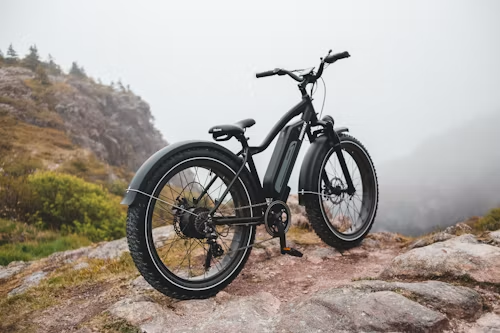
En 2026, le vélo électrique n’est plus un simple effet de mode : il est devenu un véritable pilier de la mobilité urbaine. Face à la congestion croissante des villes, à la hausse du coût des carburants et à une prise de conscience environnementale de plus en plus forte, de nombreux Français ont troqué leur voiture ou leurs transports en commun contre deux roues assistées électriquement. Mais avec une offre aussi large, comment s’y retrouver et choisir le modèle réellement adapté à un usage quotidien ?
Pourquoi le vélo électrique séduit autant en 2026
L’attrait pour les vélos électriques s’explique par plusieurs facteurs convergents. D’une part, les progrès technologiques ont permis d’améliorer considérablement l’autonomie des batteries tout en réduisant leur poids. D’autre part, les infrastructures cyclables se sont multipliées dans la plupart des grandes agglomérations, rendant les trajets à vélo plus sûrs et plus agréables. Enfin, l’aspect économique n’est pas négligeable : entretenir un vélo électrique coûte nettement moins cher qu’une voiture, que ce soit en carburant, en assurance ou en stationnement.
Pour les trajets domicile-travail, un vélo électrique bien choisi permet souvent de gagner du temps par rapport à la voiture, surtout aux heures de pointe, tout en évitant le stress des embouteillages.
Les critères essentiels à prendre en compte
Avant d’investir dans un vélo électrique, plusieurs éléments méritent une attention particulière.
L’autonomie de la batterie arrive en tête des priorités. Pour un usage quotidien, il est recommandé de viser une autonomie réelle d’au moins 50 kilomètres, sachant que cette valeur peut varier fortement selon le relief, le poids du cycliste et le mode d’assistance choisi. Certains modèles proposent désormais des batteries amovibles, pratiques pour recharger directement chez soi ou au bureau.
Le type de moteur influence également le comportement du vélo. Les moteurs pédaliers, positionnés au niveau du boîtier de pédalier, offrent une répartition du poids plus équilibrée et une sensation de conduite plus naturelle. Les moteurs situés dans la roue, souvent plus abordables, conviennent bien aux trajets urbains sur terrain plat.
La qualité du freinage ne doit pas être négligée non plus. Les freins à disque hydrauliques garantissent une meilleure puissance de freinage et une usure plus progressive, un atout non négligeable en cas de pluie ou de circulation dense.
Enfin, le confort quotidien dépend aussi de détails pratiques : garde-boue, porte-bagages, éclairage intégré, béquille robuste et protection contre les intempéries. Ces éléments, souvent sous-estimés, font pourtant toute la différence sur le long terme.
Les modèles adaptés à la ville
Pour les déplacements urbains, les vélos électriques pliants gagnent en popularité, notamment auprès de ceux qui combinent vélo et transports en commun. Compacts et légers, ils se rangent facilement dans un appartement ou un bureau. Les vélos de ville classiques, quant à eux, séduisent par leur position de conduite droite et confortable, idéale pour les trajets courts à moyens.
Certains modèles misent également sur la connectivité, avec des applications mobiles permettant de suivre l’autonomie restante, de localiser le vélo ou encore de personnaliser les niveaux d’assistance selon le type de trajet.
Et pour les usages plus polyvalents ?
Les personnes qui alternent trajets professionnels et sorties le week-end privilégieront des modèles hybrides, capables de s’adapter aussi bien à la route qu’à des chemins légèrement accidentés. Ces vélos, généralement équipés de pneus plus larges et d’une suspension avant, offrent davantage de polyvalence sans sacrifier le confort au quotidien.
Il existe aujourd’hui une large gamme de vélos électriques conçus pour répondre à ces différents besoins, qu’il s’agisse de trajets courts en ville ou de parcours plus longs incluant quelques portions non goudronnées.
Un investissement à considérer sur la durée
Le prix d’un vélo électrique varie considérablement selon la marque, la qualité des composants et le niveau d’équipement. Il est conseillé de ne pas se focaliser uniquement sur la puissance du moteur, mais de considérer l’ensemble du vélo : cadre, transmission, freinage et service après-vente. Un bon vélo électrique, correctement entretenu, peut facilement durer plusieurs années tout en conservant de bonnes performances.
En conclusion
En 2026, choisir un vélo électrique pour ses trajets quotidiens ne se résume plus à comparer la puissance des moteurs. Il s’agit avant tout de trouver un équilibre entre autonomie, confort, praticité et budget, en fonction de son propre mode de vie. Que ce soit pour rejoindre son lieu de travail, faire ses courses ou profiter d’une balade le week-end, le vélo électrique s’impose aujourd’hui comme une solution de mobilité durable, économique et parfaitement adaptée aux réalités urbaines actuelles.
